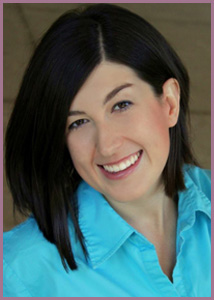
About Jill Khaleghi (she/her)

Soprano/Belter, Gender-Affirming Vocal Coach, Music/Choir/Vocal Director

Masters of Music Degree in Vocal Performance & Pedagogy from Arizona State University, with a concentration in teaching contemporary (popular) vocal techniques

Neurodivergent Zebra with Ehlers-Danlos Syndrome (Hypermobile type), Mast Cell Activation Disorder, Fibromyalgia, Dystonia, and more!

I’m pleased to announce that I’m accepting new students (ages 12+) to my online voice studio! I’ve worked with many different types of voices for over 20 years now, including: all ages (4-90), all skill levels (from true beginners to professionals), and in diverse settings (musical theatre, operas, choirs, bands, kids & teens classes, etc). I’m living my dream career!


I focus on healthy singing technique and proper voice care, with my main goal being for you to truly understand how to keep your voice in excellent condition for life! That said, I also encourage the exploration of different vocal stylisms, depending on the musical genre. I break down specific vocal techniques via body-mapping, which explains the anatomy & physiology of the vocal tract, then we match our physical sensations experienced during singing,

I sing and teach most vocal stylisms, including pop, rock, musical theatre, jazz, R&B, soul, folk, classical & choral. With 2 decades of vocal training & teaching experience, I love helping other vocalists navigate/create their unique sound! We accomplish this by exploring the different parts of their vocal tract, memorizing each particular coordination of their intricate head & neck muscles. 


I truly believe that, just like any other instrument, everyone has the ability to develop their singing voice, as long as they’re willing to put in the work. As long as you’re willing to devote sufficient time and energy to develop your instrument, I promise to safely guide your exploration of your most resonant, easy-to-project voice.


A truly resonant sound will always be more comfortable to produce, directly resulting in a reduction of your overall physical effort. Matching your different physical sensations in your head and upper body (created via resonance) with your ability to body-map your vocal tract, gives a clearer picture of the many ways you can use your body as a vocalist. This approach will give you plenty of tools to choose from, in what I like to call “your singer’s toolkit.”


Equally important is understanding how the current state of the body can both positively and negatively impact the voice, and how to remedy your specific difficulties. I approach vocal technique in a functional, scientific manner that allows my students to gain results quickly! I’ll help you find your most resonant, easy-to-project voice with the least physical effort, by helping you find your truly resonant sound, which will always be easier to sing, and will therefore be more comfortable overall. 


I love helping other singers develop what I like to call their “singer’s toolkit” by matching each vocal technique with its appropriate physical sensation, then pairing those sensations with a thorough understanding of body-mapping (anatomy & physiology for singers). This 3-point approach has proven to be most effective, as it makes it much easier to recreate those same sensations later on while practicing. My overall goal for everyone I work with is for them to truly understand how to troubleshoot their own vocal issues in the future without my help. Of course, there’ll always be vocal emergencies, odd technical issues to sort out, and audition/concert/show prep, so I try to stay available for last-minute technical help or advice on vocal health. I strive to assist my students in achieving their vocal goals, such as: get cast in lead/paid roles for musical theatre shows, maintain their voice for reoccurring 3-hour gigs, prepare for college auditions and choir performances, or just to have fun safely “belting” out your favorite karaoke songs with friends and not experience any strain!

If you’re also hyper-mobile (naturally flexible or “double-jointed”) like myself, please be sure to check out my hypermobility page for more specific info. on ways you can alleviate your body pain, which releases excessive throat & body tension and allows your voice to soar! Typical vocal issues experienced by singers with hypermobility are: 1) poor breath support/management (due to weak/unstable pelvic floor muscles and postural alignment difficulties),  2) excessive tension problems (in the facial muscles, tongue, jaw, throat, shoulders, etc),  3) inconsistent pitch problems singing sustained notes (from breath issues & sometimes poor proprioception in the throat),  4) an overly-wide vibrato (larynx bobs up & down too far),  5) a brighter/sharper/louder tone quality than average (due to an unusually narrow/high hard palate that didn’t spread out during puberty years), and more. I slowly but successfully worked through each of these issues over time and have finally achieved a sound I really like, and so can you!


And yes, there’s even a safe way to “scream,” aka distortions/rough effects! This includes vocal fry (the back part of the true folds), the rattle (arytenoid cartilages), the growl (epiglottis + arytenoid cartilages), the grunt (most of the vocal tract is involved), as well as the infamous false folds “scream” (false folds) – all without hurting yourself! It’s crucial to keep in mind that because these distorted sounds require other parts of the vocal tract to oscillate (repeatedly open-close to create sound) other than the true vocal folds. With multiple oscillations occurring at once throughout the vocal tract, these distortions really do require an advanced level of coordination, which in turn requires the proper guidance and feedback from a well-trained vocal coach. Always practice in very short segments. Just a few minutes at a time until your voice feels tired or uncomfortable, then immediately stop and wait until tomorrow before practicing again.

Read More about my experience at LinkedIn.